
Landian Insights · Selling
Only 1 in 20 Homes Sold Without an Agent Last Year. Here’s the $23,000 Reason FSBO Keeps Falling.
September 28, 2026 · Landian · 7 min read
The short version
For-sale-by-owner deals were 21% of US home sales in 1985, 10% in 2022 and 5% in 2025, the lowest NAR has ever recorded. Sellers keep quitting the do-it-yourself route for five reasons, and one of them costs more than the commission it was meant to save.
- The price penalty. Comparable owner-sold homes fetch about 5.5% less; the raw medians are 18% apart. On the median agent-assisted home, 5.5% is about $23,000.
- Buyers search online, owners don’t list there. Only 10% of owner-sellers put the home on a site like Zillow.
- Paperwork and liability got heavier, and the 2024 settlement rewrote the forms.
- Owners price by estimate and emotion in a market where the typical home already takes 49 days to sell.
- 88% of buyers arrive with an agent, and those agents route around owner listings.
The motive for going it alone has not changed: the commission. What has changed is the math on the other side of the ledger. Here is what the data says in the United States and Canada, and what a seller who wants the savings without the downside can do about it.
1. The price penalty usually costs more than the commission saved
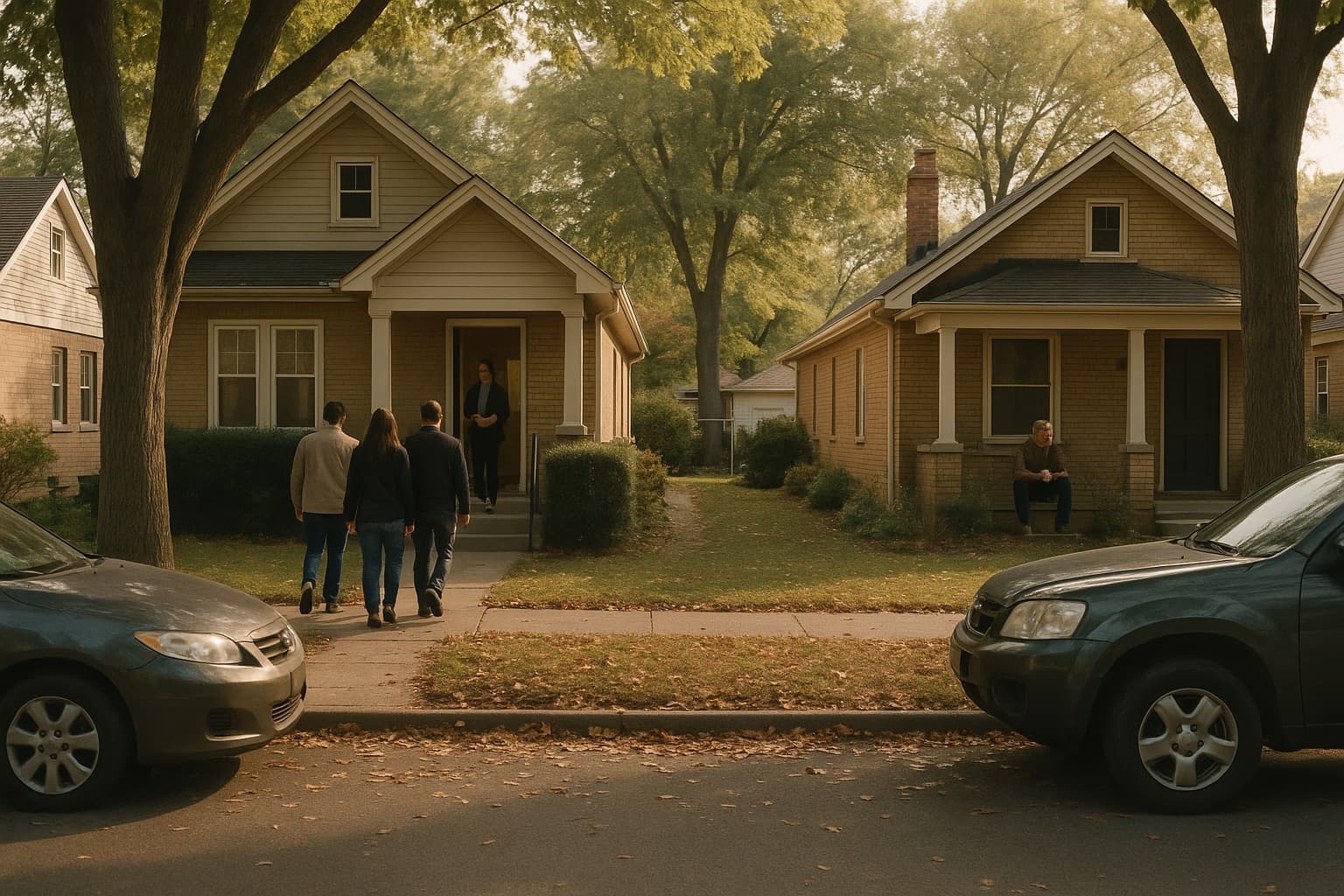
Same street, same Sunday. The penalty is not the agent’s label; it is the buyers who never come.
$360K
median FSBO sale, vs $425K agent-assisted
NAR 2025 Profile
5.5%
discount on owner-sold homes vs comparable MLS sales
Collateral Analytics, 2017
64%
of owner-sellers did not get the price they wanted
Clever survey, cited by NAR
The raw gap is 18%. NAR’s 2025 survey found the median for-sale-by-owner home sold for $360,000 against $425,000 for an agent-assisted sale, $65,000 on the median home. Part of that is the kind of house being sold, not the way it was sold.
The like-for-like gap is still bigger than the fee. Collateral Analytics’ 2017 study of thousands of matched sales put the owner-sold discount at about 5.5% below equivalent MLS sales: roughly $23,000 on a $425,000 home, more than the listing side of a typical commission. A Stanford study of a small non-MLS market found no penalty when neither side had wide exposure, which is the point: the penalty comes from being seen by fewer buyers, and that is exactly what a do-it-yourself listing gives up.
| Line item | Dollars |
|---|---|
| Listing-side commission saved by selling alone (2.5% to 3%) | $10,600 to $12,750 |
| Price penalty at 5.5% (matched-sale studies) | −$23,400 |
| Price penalty at 18% (NAR raw medians) | −$76,500 |
| Standard Landian fee, full MLS exposure kept | $4,999 |
2. Buyers search online, and the owner’s sign did not follow

Buyers start in the feed. A listing that is not in it does not exist for most of them.
10%
of owner-sellers listed on a third-party site such as Zillow
NAR 2025 Profile
40%
did not actively market the home at all
NAR 2025 Profile
60%
already knew their buyer
NAR 2025 Profile
The Multiple Listing Service feeds nearly every portal buyers use, and an owner cannot post to it directly without paying a flat-fee entry service or hiring an agent. NAR’s numbers show what happens instead: 10% of owner-sellers used a site like Zillow, 10% got onto the MLS, 12% used a yard sign and 18% told friends and neighbours. The owner-seller of 2025 is, more often than not, selling to a relative or a neighbour rather than competing for the open market, and the ones who do try the open market alone reach a fraction of the buyers an MLS listing reaches.
3. Disclosure law, contracts and liability got heavier
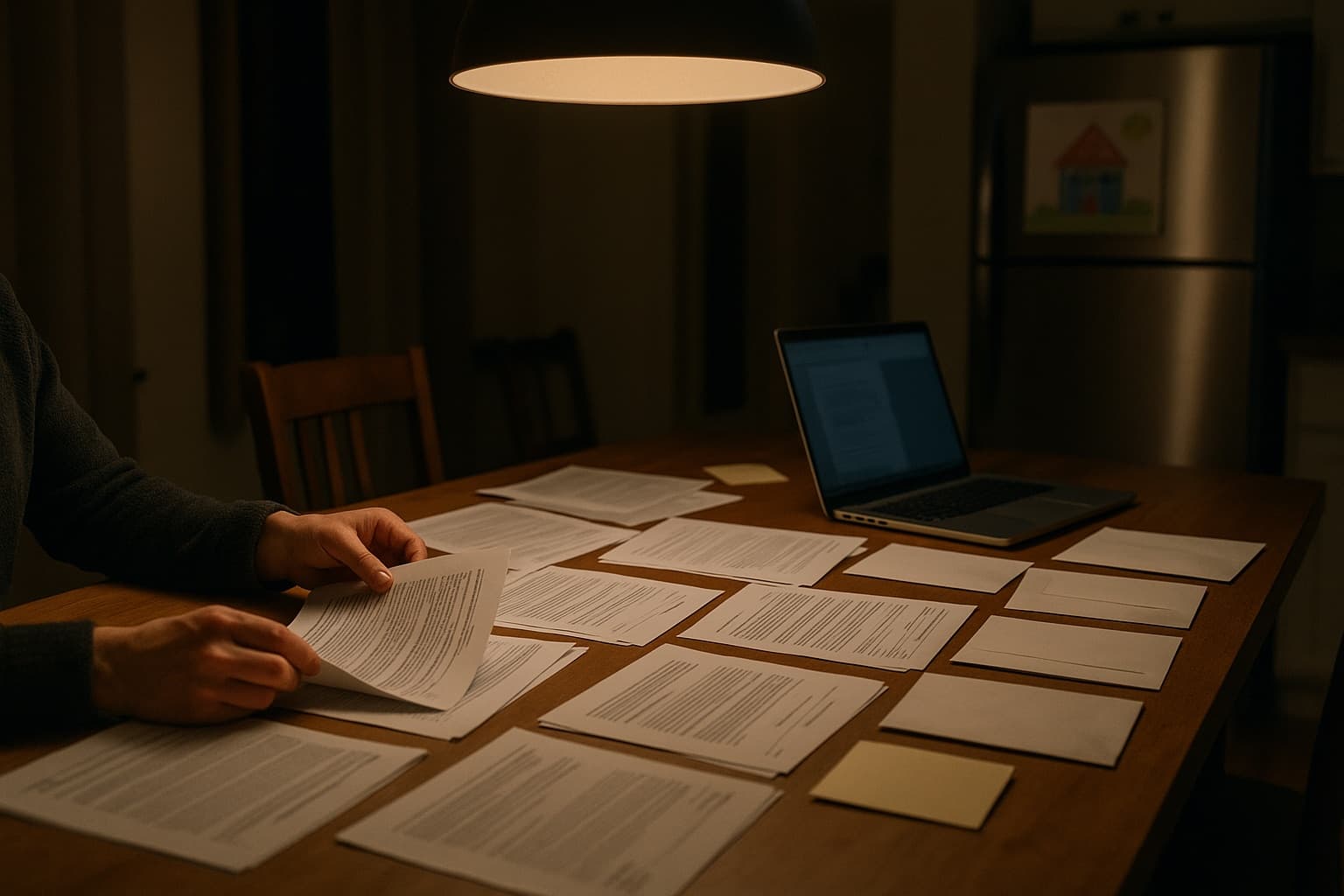
Disclosures, contingencies, addenda, title, inspection responses: the paperwork is where owner-sellers most often get hurt.
A home sale is a legal transaction with statutory disclosure duties that vary by state and province, a binding purchase contract with contingency deadlines, and a closing that coordinates lender, title or notary, inspector and appraiser. Owner-sellers in NAR’s survey name understanding and performing the paperwork among the hardest parts of the sale, and Realtor.com’s reporting on why FSBO deals fall through points to the same thing: a missed disclosure or a mishandled contingency can cost the deal, or produce a lawsuit after closing. Since the 2024 NAR settlement the forms themselves have changed in the US, with written buyer agreements and new compensation rules that an occasional seller has no reason to know.
4. Owners price on estimates and emotion, and both are expensive
Overpriced homes sit, and in 2026 sitting is expensive.
49 days
median time to sell a US home this summer
Redfin
58%
more sellers than buyers in August, a record
Redfin, Sep 10, 2026
~1 in 2
sellers now offering concessions to close
Redfin, Sep 2026
Without a comparative market analysis, owner-sellers price from automated estimates or from what the house means to them. Both errors cost money. Overpricing leaves the home on the market past the point where buyers assume something is wrong with it, and in a market with a record surplus of sellers a stale listing ends in a bigger cut than a correct price would have. Underpricing, common when the seller already knows the buyer, simply hands over equity. Neither shows up in the seller’s commission calculation, and both feed the penalty in point one.
5. Most buyers arrive with an agent, and agents route around FSBOs
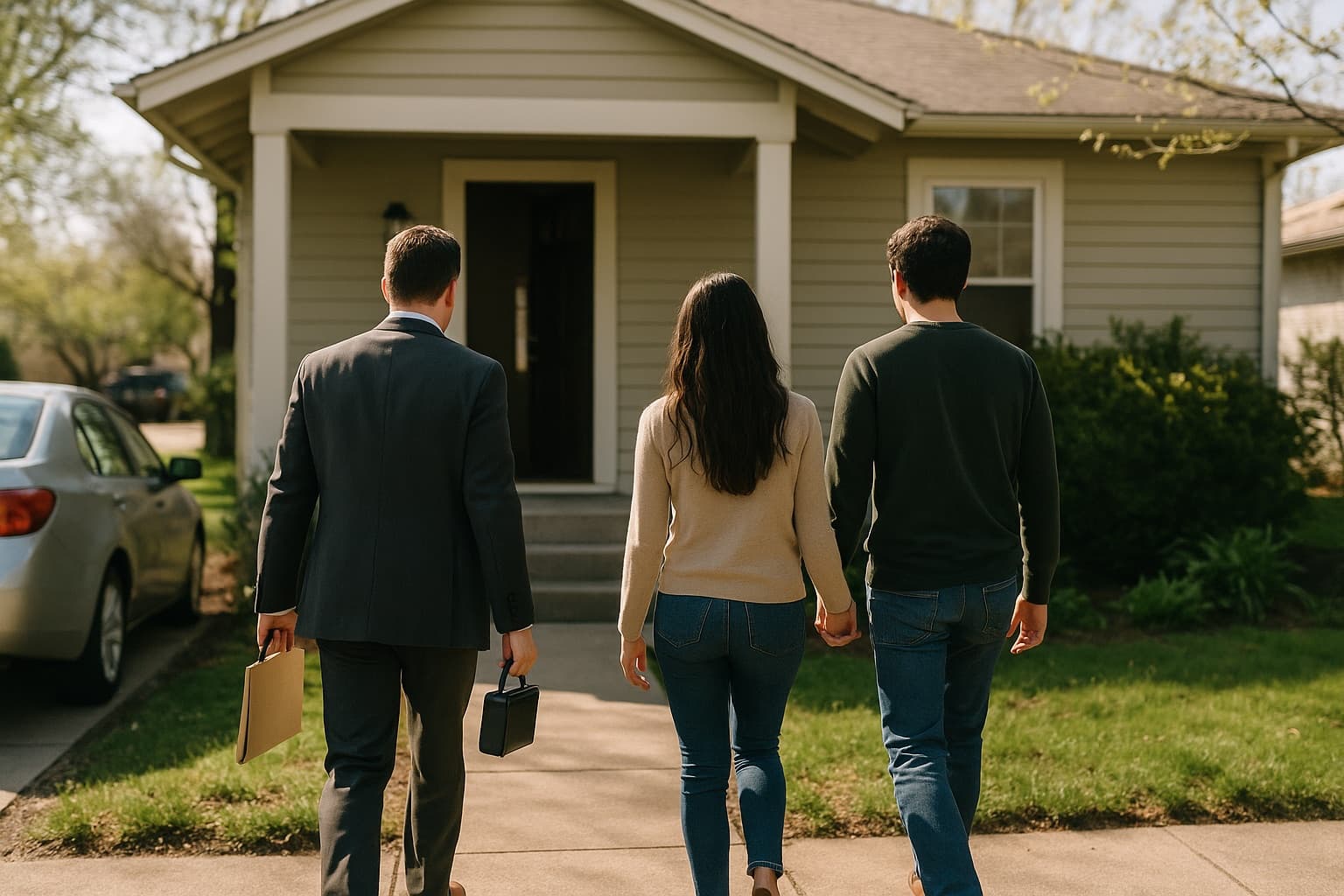
Nearly nine in ten buyers use an agent. An owner-listed home has to be worth that agent’s trouble.
88%
of buyers purchased through an agent
NAR 2025 Profile
91%
of sellers used an agent, a record high
NAR 2025 Profile
5%
of sales were for-sale-by-owner, a record low
NAR 2025 Profile
Buyer agents decide which homes to show, and an unrepresented seller is more work for them: showings to coordinate, an unscreened counterparty and, historically, uncertainty about whether and how the buyer’s agent would be paid. The 2024 settlement moved that compensation into the buyer’s own agreement, which helps, but it did not change the incentive to steer clients toward listings with a professional on the other side. An owner-listed home is cut off from a large share of active demand before a single buyer sees it.
Canada: the same forces, plus one exception
| Jurisdiction | Source | Owner listings |
|---|---|---|
| Quebec | DuProprio | 7,851 |
| Ontario | Kijiji, for sale by owner | 1,886 |
| Alberta | Kijiji, for sale by owner | 483 |
| British Columbia | Kijiji, for sale by owner | 190 |
| All other provinces and territories | Kijiji, for sale by owner | 679 |
Landian FSBO Index, all prices. Florida, the largest US owner-listing market, had 4,187 on Zillow the same day.
Canada has no national survey as detailed as NAR’s, but the direction is the same. Estimates that a fifth or more of Canadian homes changed hands without a broker date from the 2000s; the 470,314 sales CREA counted in 2025 ran almost entirely through MLS systems, and the pressure on commissions is arriving through the courts instead. The Sunderland class action over buyer commissions in the Toronto area has been cleared to proceed to certification, and the Competition Bureau widened its investigation of commission rules in 2025.
The exception is Quebec, where an owner can list on DuProprio, a platform every Quebec buyer already checks. Quebec’s 7,851 owner listings are more than the other nine provinces combined and more than any US state. Quebec has the one thing the five reasons above deny everyone else: mainstream exposure without an agent. The rest of Canada looks like the United States.
Keeping the savings without paying the penalty
Every one of the five reasons argues for a licensed professional on the listing: MLS exposure, correct pricing, the disclosure and contract work, and a counterparty buyer agents are comfortable with. None of them is a reason to pay 5% or 6% of the sale price for it. That gap is what Landian was built for.
- A licensed local agent at a standard fee of $4,999 per transaction. The fee is set before you meet the agent. Some agents may propose a higher fee for an unusual home, a distant location or a rush timeline; you see any change before an agent is confirmed and can decline it.
- Full exposure, full representation. Your home goes on the MLS and every portal it feeds, priced from a real market analysis, with the paperwork handled by someone who does it every week. That is what closes the price gap.
- Non-exclusive, cancel any time. If it is not working, you walk away.
- The buyer’s side is negotiable too. Since the 2024 settlement no seller has to bake a buyer-agent commission into a listing.
On NAR’s $425,000 median agent-assisted sale, a 2.5% to 3% listing commission is $10,600 to $12,750. A standard $4,999 fee keeps $5,600 to $7,750 of that with the seller, and keeps the exposure that prevents a five-figure price penalty. Landian works across the United States, Puerto Rico and Canada.
Sources: National Association of Realtors, 2025 Profile of Home Buyers and Sellers (Nov 2025) and FSBOs Reach All-Time Low, More Sellers Rely on Agents (Nov 2025); Clever Real Estate seller survey as cited by NAR; NAR existing-home sales, 2025 annual and August 2026; Collateral Analytics, Sklarz and Miller, Saving Real Estate Commissions at Any Price (Aug 2017); Bernheim and Meer, Do Real Estate Brokers Add Value When Listing Services Are Unbundled? (Economic Inquiry, 2013); Realtor.com, Why FSBO Sales Fail; Redfin, buyers-vs-sellers analysis (Sep 10, 2026), seller-concessions report (Sep 2026) and June 2026 days-on-market data; Canadian Real Estate Association, Home Sales in Canada End 2025 Quietly; The Globe and Mail, Class action against commissions in real estate clears another hurdle; Landian FSBO Index, September 2026. Price-penalty estimates vary by market and study; the figures above are national.