Selling in Temecula or Murrieta?A flat fee, not a commission.
Moving to Temecula and Murrieta?
Licensed local agents who list, negotiate and close your southwest Riverside County home for one flat fee set by its price. Set before you meet your agent. Non-exclusive. Cancel anytime. Paid only at closing.⁶
Not locked in until your home is listed. Cancel from your dashboard.
A licensed local buyer's agent for one flat fee set by the price of the home you buy, usually covered by the seller's contribution.¹
Temecula (114,865 people by the Census Bureau’s July 1, 2025 estimate) and Murrieta (114,124) are twin I-15 cities at the south end of Riverside County, an hour from San Diego, and Landian works across both, and the newer neighborhoods around them, with licensed local agents. Sellers list on the MLS with a licensed local agent for one flat fee set by the home's price, not a commission: $5,999 flat for a home around $650,000. $7,999 flat for a home around $800,000. $9,999 flat for a home around $1,200,000. The fee is shown before you meet the agent, written into your agreement, and paid only at closing. Buyers get a buyer's agent on the same schedule, based on the price of the home they buy, usually covered by the seller's contribution; anything the seller contributes above it comes back as a rebate or closing credit where allowed.⁶
What's your home worth in Temecula?
Enter your address. We'll look up your home's value and show your flat fee, set by its price.
Temecula and Murrieta at a glance
Two cities of almost exactly the same size, both well above the Inland Empire’s core on price. Zillow put the typical home at $753,528 in Temecula and $683,153 in Murrieta in October 2026, against $643,121 in the city of Riverside and $580,085 in fast-growing Menifee next door.
Temecula
Riverside County
Residents (2025 est.)
114,865
Median home value*
$679,700
Homeowners
68.0%
Average commute
36.3 min
Murrieta
Riverside County
Residents (2025 est.)
114,124
Median home value*
$639,800
Homeowners
69.5%
Average commute
37.4 min
U.S. Census Bureau QuickFacts: residents are the July 1, 2025 population estimate; *median value of owner-occupied homes, homeowners (owner-occupied share of homes) and mean travel time to work are American Community Survey 2020-2024 figures, so recent sale prices can run higher.
Living in Temecula and Murrieta
A stage stop that became Southern California’s wine capital, a sheep ranch that incorporated to keep its own name, and a 33,000-acre wine country holding the valley’s eastern edge.
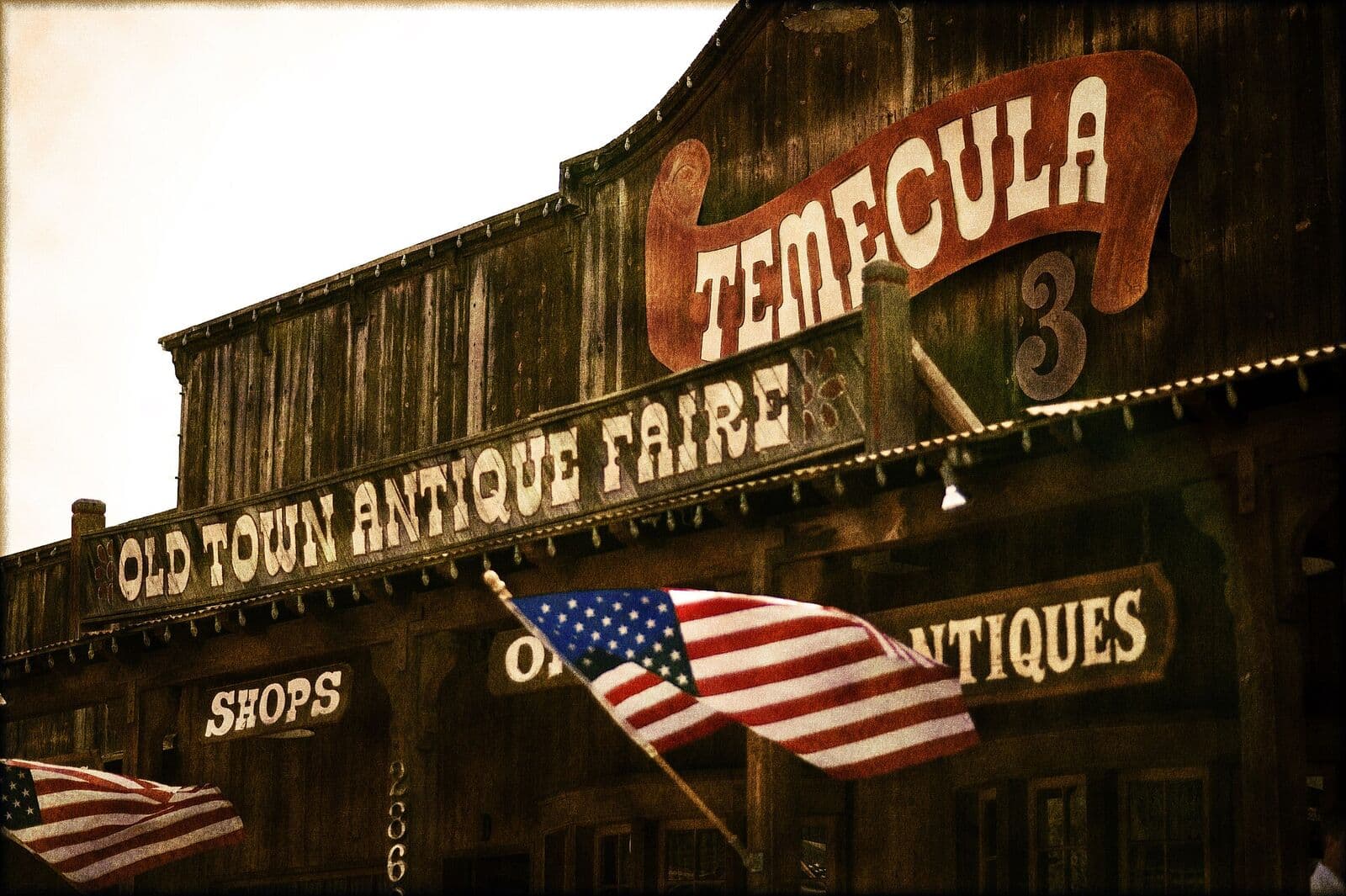
Old Town Temecula
Temecula
From Butterfield stage stop to wine capital
Temecula was a crossroads long before the freeway. The name comes from the Luiseño word Temecunga, which the Spanish spelled Temecula and translated as “where the sun breaks through the mist”; in 1858 the village became a stop on the Butterfield Overland Stage route, and in 1882 a rail line from National City reached town before 1880s floods washed out the tracks for good (Temecula Valley’s visitor bureau). The modern city incorporated in 1989 and has grown to 114,865 people by the Census Bureau’s July 1, 2025 estimate.
Old Town keeps the frontier bones: the Hotel Temecula went up in 1891 after fire took the first hotel, and the Burnham Store was built in the early 1890s of fired Temecula bricks (Temecula Valley Historical Society). At the city’s southern edge, Pechanga Resort Casino, with 1,100 rooms and a 200,000-square-foot casino floor, describes itself as one of the largest resort/casinos in the United States.
Murrieta began as a very large ranch: Esequial Murrieta bought 52,000 acres here in the 1870s, and his brother Juan returned to run it with a flock of 100,000 sheep; the railroad arrived in 1882, and the mineral springs that Native people had used for centuries became the Murrieta Hot Springs resort near the turn of the century (Patch’s history of the city). When neighboring Temecula incorporated in 1989 and looked at annexing the town, residents voted to keep their own name instead, and Murrieta incorporated on July 1, 1991 with about 24,000 people. The Census Bureau’s July 1, 2025 estimate counts 114,124.
The hot springs are the comeback story: closed to the public for nearly 30 years, the 46-acre resort reopened on February 1, 2024 with more than 50 pools and water features (ABC7). Day to day, Murrieta is a family city of newer master-planned neighborhoods, and its hospital row includes Loma Linda University Medical Center – Murrieta, which U.S. News ranks among the best hospitals in the Riverside–San Bernardino metro area.
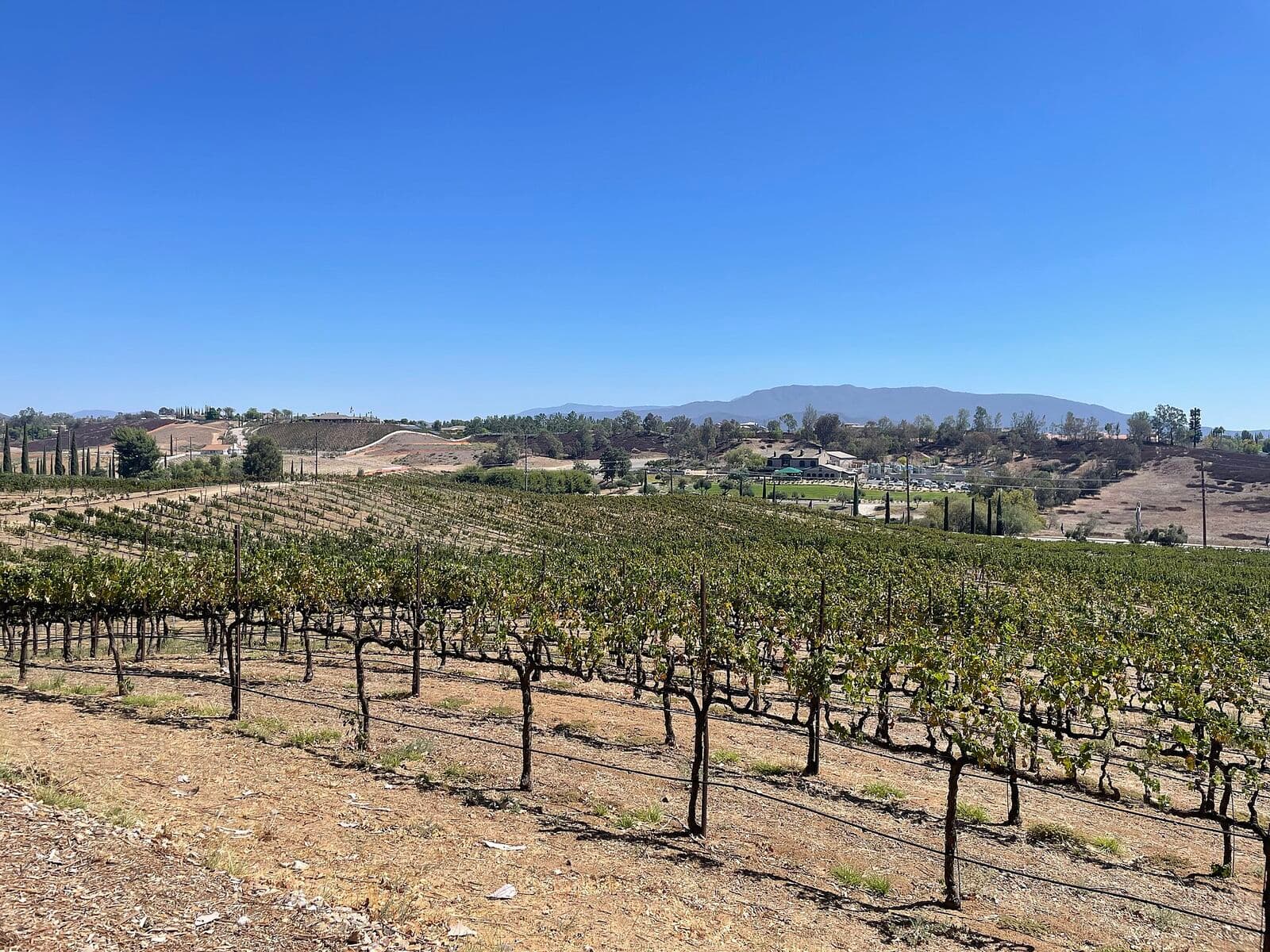
East of the city, the Temecula Valley AVA covers 33,000 acres that federal regulators first recognized in 1984 and renamed Temecula Valley AVA in 2004. About 2,460 acres are planted to commercial vineyards, roughly 5,000 acres around Rancho California Road sit in a protected Citrus/Vineyard Zone, and nearly 50 wineries pour here, most of them along Rancho California Road, Calle Contento and De Portola Road (Temecula Valley Winegrowers Association).
The vines go back further than the tasting rooms: Spanish missionaries planted the valley’s first wine grapes in 1820, Vincenzo and Audrey Cilurzo planted the first modern commercial vineyard in 1968, and Callaway, the first winery, opened in 1974. Sea air pulled through gaps in the coastal range, less than 25 miles away, cools the vines every afternoon, and hot-air balloons drifting over the vineyards at dawn are part of the scenery.
Rancho California Road
De Portola Road
Calle Contento
Citrus/Vineyard Zone
Why people are buying here now
What the numbers say about the south end of Riverside County.
Two cities, still growing
The Census Bureau estimates Temecula grew from 109,990 at the April 2020 Census to 114,865 on July 1, 2025, and Murrieta from 110,989 to 114,124. Menifee, the next city up I-215, jumped 15.7% to 118,592 over the same five years, the fastest growth in the valley.
Values are holding
Zillow’s typical home value for October 2026 was $753,528 in Temecula, up 0.6% in a year, and $683,153 in Murrieta, up 0.5%, while much of the country cooled. Both sit well above the city of Riverside’s $643,121.
A 30-year landmark came back
Murrieta Hot Springs reopened to the public on February 1, 2024 after nearly 30 years as a private retreat: 46 acres and more than 50 pools and water features, restored as a destination resort (ABC7).
Wine country is protected, not provisional
The Temecula Valley AVA’s 33,000 acres include a roughly 5,000-acre protected Citrus/Vineyard Zone around Rancho California Road, so the valley’s eastern edge stays vines and groves rather than rooftops (Temecula Valley Winegrowers Association).
What homes here look like
Master-planned neighborhoods from the 1990s onward, mostly owned by the people who live in them: 68.0% of occupied Temecula homes and 69.5% in Murrieta are owner-occupied, and the median owner-occupied home is $679,700 in Temecula and $639,800 in Murrieta (ACS 2020-2024). Zillow’s October 2026 typical values run higher: $753,528 in Temecula and $683,153 in Murrieta.
Temecula
Zillow’s typical value was $753,528 in October 2026, the highest in southwest Riverside County. East of town, wine-country parcels in and around the protected Citrus/Vineyard Zone trade acreage and vines for a longer drive to the freeway.
Murrieta
Zillow’s typical value was $683,153 in October 2026. Most of the housing stock is newer master-planned subdivisions; ask when the neighborhood was built and what its association covers.
The newer edges
Zillow’s October 2026 typical values were $645,617 in Wildomar and $580,085 in Menifee, the valley’s value plays. Many newer subdivisions across the valley carry a Mello-Roos special tax on top of the base property tax, so ask for the Notice of Special Tax early.
Schools
Each city has its own K-12 district. Temecula Valley Unified School District enrolls 28,031 students in 2025-26 (California Department of Education), and Murrieta Valley Unified School District describes itself as a preschool-through-12th-grade district serving southwest Riverside County. Attendance boundaries follow the street address and parts of the valley’s newer edges fall under neighboring districts, so check a specific home with the district before you write an offer.
This is I-15 country: the freeway runs the length of both cities, and I-215 splits off in Murrieta toward Menifee and Riverside. The wine country’s own fact sheet puts the valley within a 60-minute drive of San Diego, Orange County and Palm Springs and within 90 minutes of Los Angeles, and the coast is less than 25 miles away over the mountains (Temecula Valley Winegrowers Association). French Valley Airport, just northeast of Murrieta, handles general aviation.
The honest number is the commute: the Census puts the mean travel time to work at 36.3 minutes in Temecula and 37.4 in Murrieta (ACS 2020-2024), among the longest in any area we cover, because so many residents work in San Diego County or coastal employment centers. Buyers trading a coastal mortgage for space here should drive their real commute at rush hour before falling for a floor plan.
The plateau, the mountains and the vines
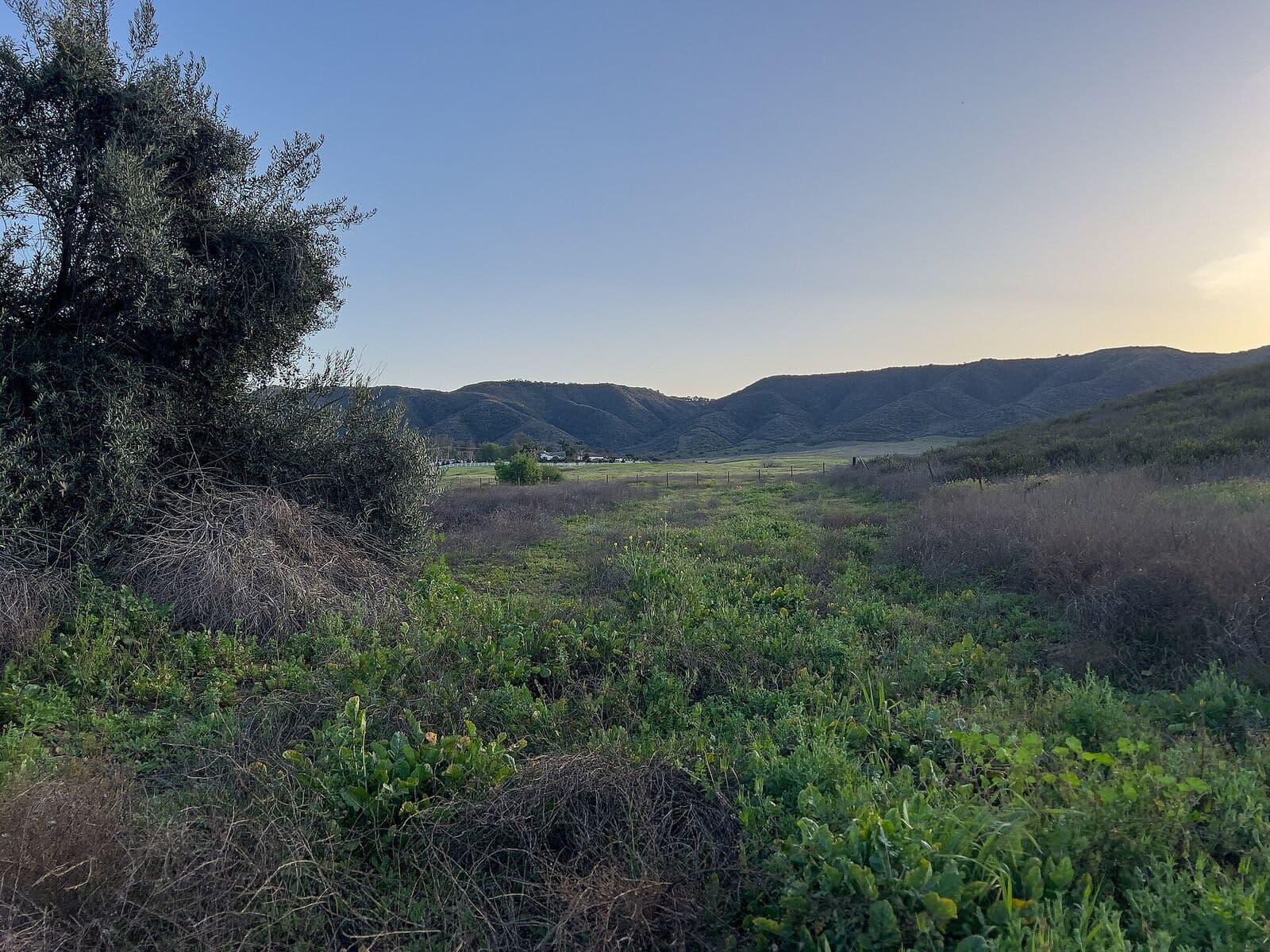
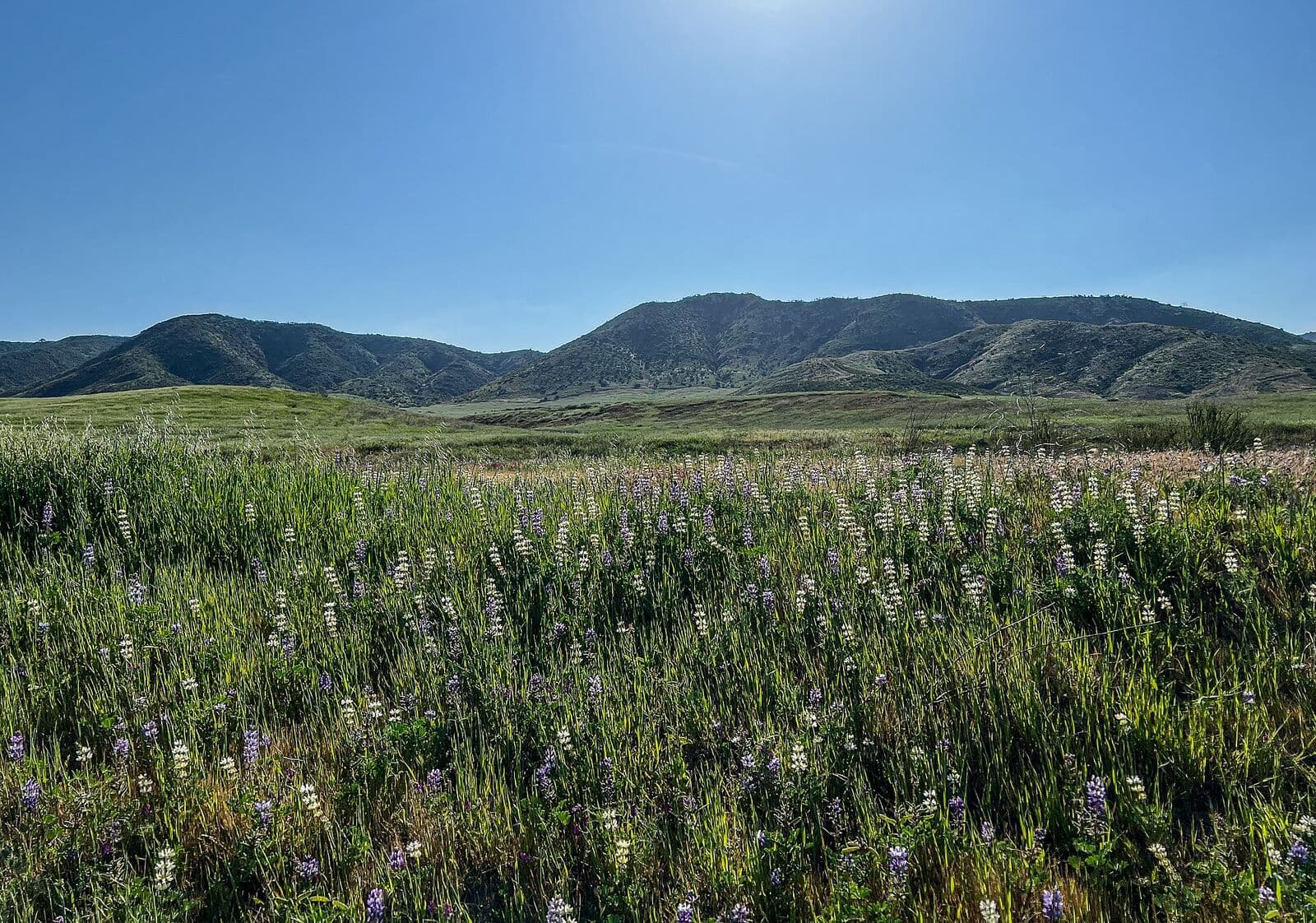
The valley is ringed by protected land. Southwest of Murrieta, the Santa Rosa Plateau Ecological Reserve protects approximately 7,500 acres of oak woodland, chaparral and native grassland at the top of the Clinton Keith Road grade (California Department of Fish and Wildlife); the land north and east of the plateau was developed as Rancho California, which became Temecula and Murrieta. The Santa Ana Mountains rise directly behind both cities, and spring turns their foothills green and scatters them with lupine.
East of Temecula the open land is working land: 33,000 acres of AVA where about 2,460 acres of vineyards share the valley with horse properties and citrus, and where sea air pulled through gaps in the coastal range cools every afternoon (Temecula Valley Winegrowers Association).
Santa Rosa Plateau
Approximately 7,500 acres of oak woodland, chaparral and native grassland in an ecological reserve at Murrieta’s southwest corner, reached from Clinton Keith Road (California Department of Fish and Wildlife).
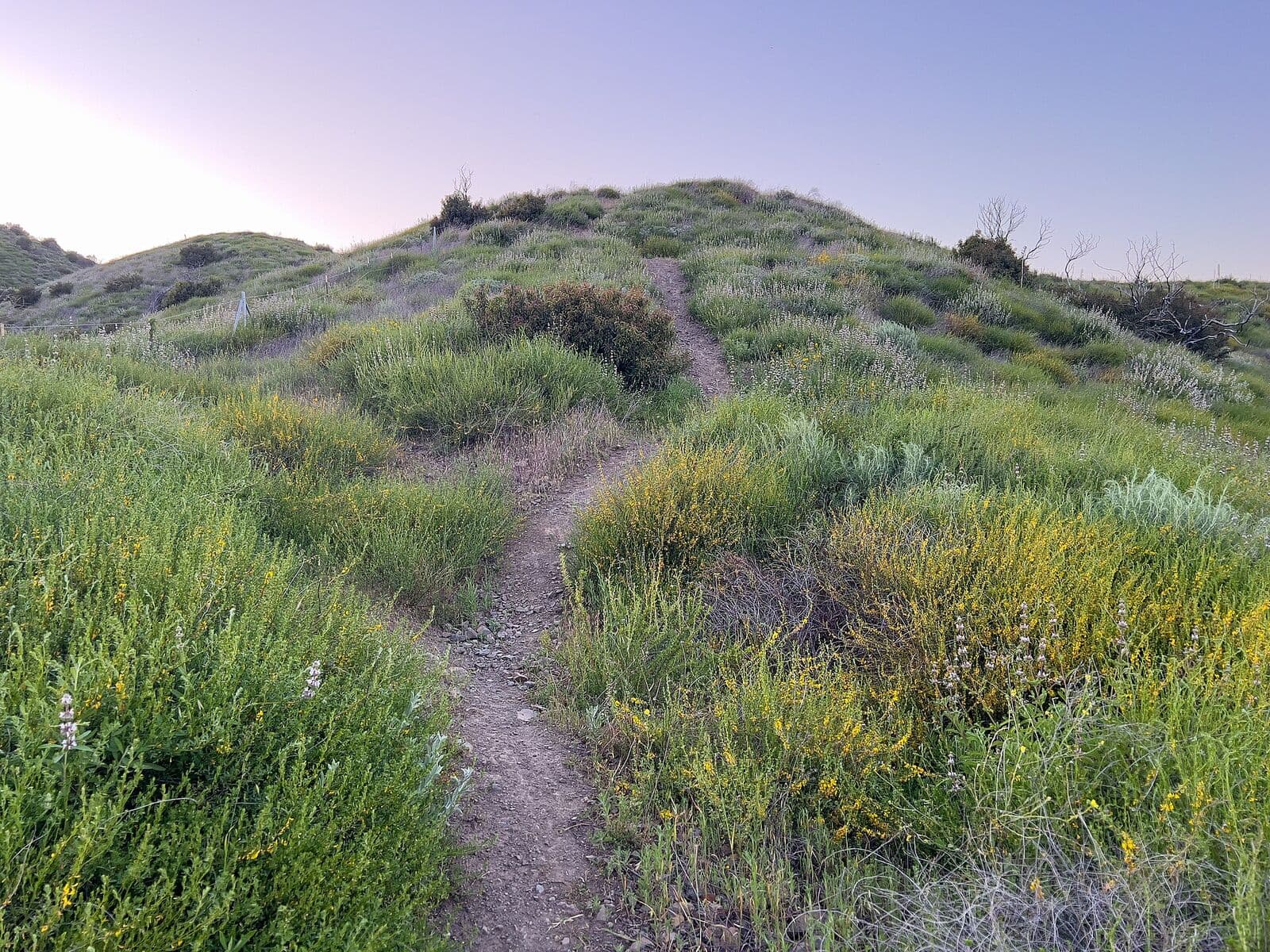
The Santa Ana foothills
Trail networks climb straight out of west-side neighborhoods into the Santa Ana Mountains, with valley views that take in both cities and, in spring, hillsides of lupine and sage.
Wine country mornings
Nearly 50 wineries along Rancho California Road, Calle Contento and De Portola Road, with hot-air balloons over the vines at dawn (Temecula Valley Winegrowers Association).
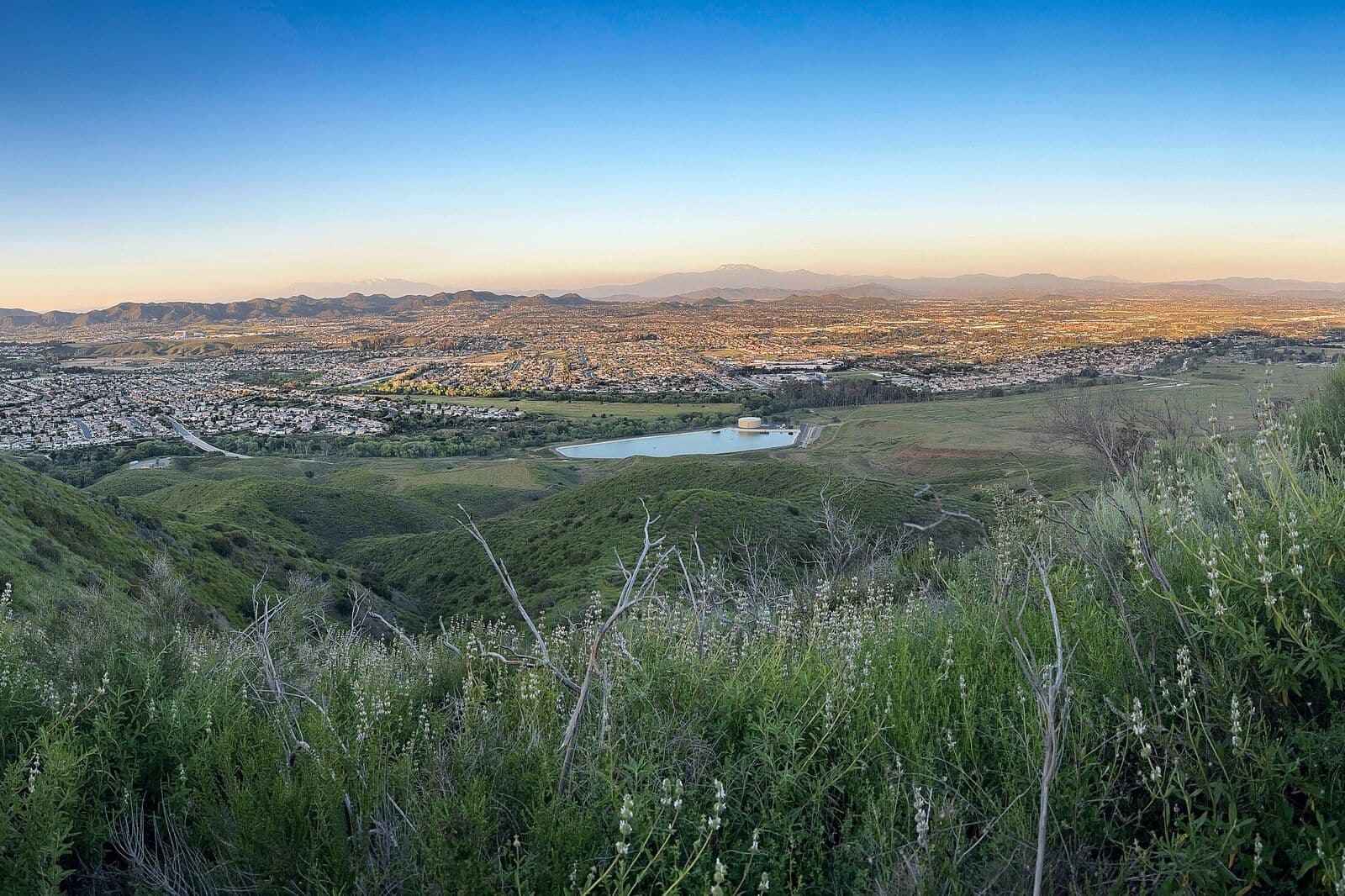
Looking toward the Santa Rosa Plateau from Murrieta
Buying in Temecula or Murrieta: taxes and the fine print
California’s Proposition 13 limits the base property tax rate to 1 percent of assessed value plus voter-approved bonded debt, and holds assessment increases to a maximum of 2 percent a year until a property changes hands or is newly built, when it is reassessed at market value (California State Board of Equalization). Buying resets the clock, so your tax bill is set by your price, not the seller’s.
Two local wrinkles. First, many newer subdivisions across the valley sit in Mello-Roos community facilities districts that levy a special tax on top of the 1 percent base; the seller’s Notice of Special Tax says what the district charges and how long it runs, so ask for it with the disclosures. Second, parts of the valley’s rural eastern and western edges fall in mapped fire hazard severity zones, which can affect insurance; check a specific address against CAL FIRE’s zone maps before you remove contingencies.
Three example prices across Temecula and Murrieta, and the listing side at each against a traditional 2.5%. One flat fee instead of a percentage: $5,999 flat for a home around $650,000. $7,999 flat for a home around $800,000. $9,999 flat for a home around $1,200,000.⁶
On a home around $650,000
Traditional listing side (2.5%)$16,250
1% service (about $3,000 minimum)$6,500
Landian flat fee$5,999
$10,251⁵⁶
more in your pocket than a traditional listing
On a home around $800,000
Traditional listing side (2.5%)$20,000
1% service (about $3,000 minimum)$8,000
Landian flat fee$7,999
$12,001⁵⁶
more in your pocket than a traditional listing
On a home around $1,200,000
Traditional listing side (2.5%)$30,000
1% service (about $3,000 minimum)$12,000
Landian flat fee$9,999
$20,001⁵⁶
more in your pocket than a traditional listing
Landian flat fee⁶1% of the price$7,999 flat for a home around $800,000. That’s 1%, and it never becomes a percentage.
Under $500,000, the fee you see is final. From $500,000, an agent may propose a different fee before you choose them, with a reason and always under 1% of your expected price. You can say no and wait for an agent who accepts.
The same three steps as everywhere on Landian, with licensed agents who work Temecula, Murrieta and the rest of southwest Riverside County.
1
Book online
Enter your address and expected price. Your flat fee shows right away; pick a consultation time.
2
Compare agents
Licensed local agents who accept your fee answer. You compare their cards (rating, experience, response time) and choose.
3
Meet and list
Meet your agent, then decide. Nothing is exclusive until your home is listed, and you can cancel from your dashboard.
Spring lupine on the Murrieta side of the Santa Ana Mountains
Moving to Temecula and Murrieta?How buying in Temecula and Murrieta works
Moving for the wine country, the schools or simply more house than the coast allows? Tell us which neighborhoods you are watching and you are matched with a licensed buyer’s agent who works the Temecula and Murrieta valleys.
A licensed buyer's agent for a flat fee from the same schedule, based on the price of the home you buy. The fee is usually covered by the seller's contribution, and anything the seller contributes above it comes back to you as a rebate or closing-cost credit where allowed.¹
How much does it cost to sell a house in Temecula or Murrieta with Landian?
One flat fee set by your home's price, not a percentage: $5,999 flat for a home around $650,000. $7,999 flat for a home around $800,000. $9,999 flat for a home around $1,200,000. It is shown before you meet your agent, written into your agreement, and paid from your proceeds at closing. Nothing upfront.
Is the fee the same in Temecula and Murrieta?
Yes. The schedule is set by the home's price, not by the town, so a home at the same price pays the same flat fee anywhere in California. Under $500,000, the fee you see is final. From $500,000, an agent may propose a different fee before you choose them, with a reason and always under 1% of your expected price. You can say no and wait for an agent who accepts.
Does Landian have agents in Temecula and Murrieta?
Yes. Landian has office pages for Temecula and Murrieta and matches you with licensed local agents within about 75 miles of your home, so Menifee, Wildomar, French Valley and the wine country are covered. Agents who accept your fee answer, and you compare them before anyone calls.
How many wineries are in the Temecula Valley?
Nearly 50, on an American Viticultural Area of 33,000 acres first recognized in 1984 and renamed Temecula Valley AVA in 2004. About 2,460 acres are planted to vines, and most tasting rooms line Rancho California Road, Calle Contento and De Portola Road (Temecula Valley Winegrowers Association).
Which school districts serve Temecula and Murrieta?
Temecula Valley Unified School District, with 28,031 students in 2025-26 (California Department of Education), and Murrieta Valley Unified School District, a preschool-through-12th-grade district serving southwest Riverside County. Boundaries follow the address, so confirm a specific home with the district.
How do property taxes work here?
Proposition 13 caps the base rate at 1 percent of assessed value plus voter-approved debt, with assessed value rising at most 2 percent a year until a sale or new construction resets it to market (California State Board of Equalization). Many newer subdivisions also carry a Mello-Roos special tax; the Notice of Special Tax in the disclosures says how much and for how long.
Is Murrieta Hot Springs open to the public?
Yes, again. After nearly 30 years as a private retreat, the 46-acre resort reopened to the public on February 1, 2024 with more than 50 pools and water features (ABC7). The springs themselves were used for centuries before the resort was built around them near the turn of the last century.
How far are Temecula and Murrieta from San Diego?
The wine country’s fact sheet puts the valley within a 60-minute drive of San Diego, Orange County and Palm Springs and within 90 minutes of Los Angeles. The Census’s day-to-day number is a mean commute of 36.3 minutes in Temecula and 37.4 in Murrieta (ACS 2020-2024).
How does buying a home in Temecula or Murrieta work with Landian?
You get a licensed buyer's agent for a flat fee from the same schedule, based on the price of the home you buy. The fee is usually covered by the seller's contribution, and anything the seller contributes above it comes back to you as a rebate or closing-cost credit where allowed.
What's your home worth in Temecula?
Enter your address. We'll look up your home's value and show your flat fee, set by its price.
Looking at homes in Temecula?
Get matched with a licensed buyer's agent who works the area, for a flat fee set by the price of the home you buy.
⁶Flat listing fee by expected price: $5,999 from $600K; $6,999 from $700K; $7,999 from $800K; $8,999 from $900K; $9,999 from $1M; $11,999 from $1.25M; $14,999 from $1.5M; $19,999 from $2M; lower below $600K. Based on the higher of the price you enter and a third-party estimate of your home’s value, and written into your Client Agreement before you meet an agent. If your listing price falls in a higher step, the fee follows the schedule; it never rises after your home is listed. Under $500K the fee you see is final; from $500K an agent may propose a different amount before you choose them, always under 1% of your expected price. Payable only at closing. Buyer-side fees use the same steps on the price of the home you buy and are usually covered by the seller’s contribution.
⁵Seller savings are estimated against a 2.5% listing-side commission on the final sale price. Commissions are not set by law and are negotiable, so actual savings vary by market, agent and property. The fee shown is the flat listing-side fee for the home’s price, set on Landian before the seller met the agent.
¹Rebates available where jurisdictional laws permit. Excludes AL, AK, KS, LA, MS, MO, OK, OR, TN. Seller credits may be requested as an alternative to rebates in restricted jurisdictions.